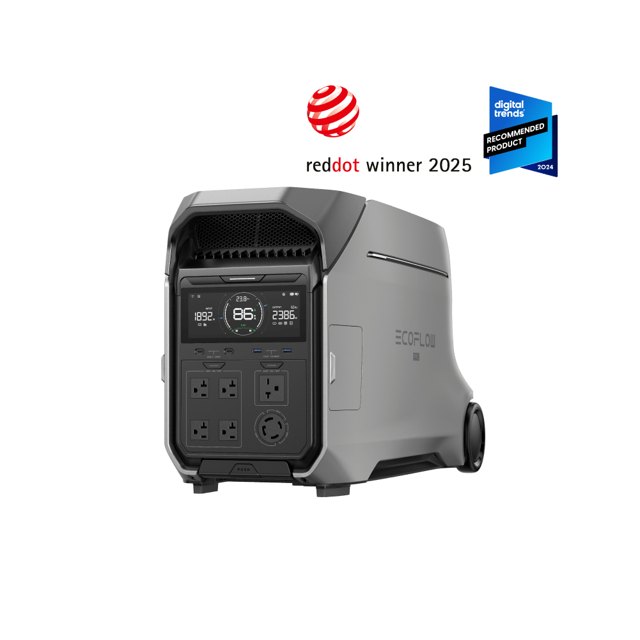
Best small unit
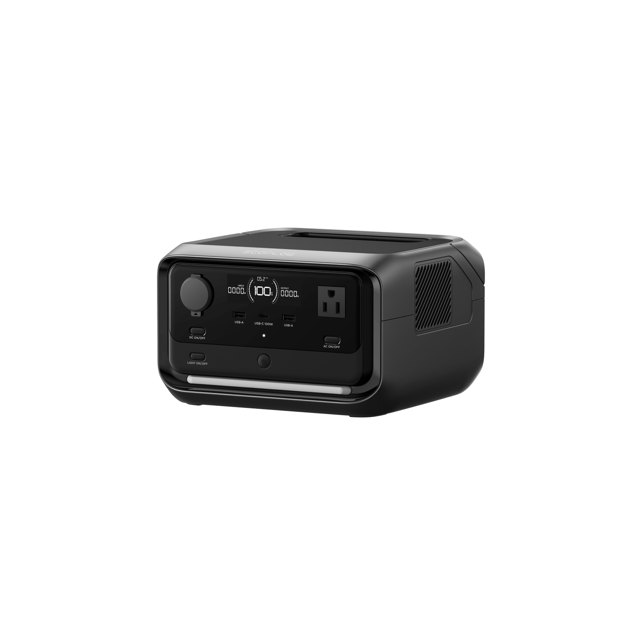
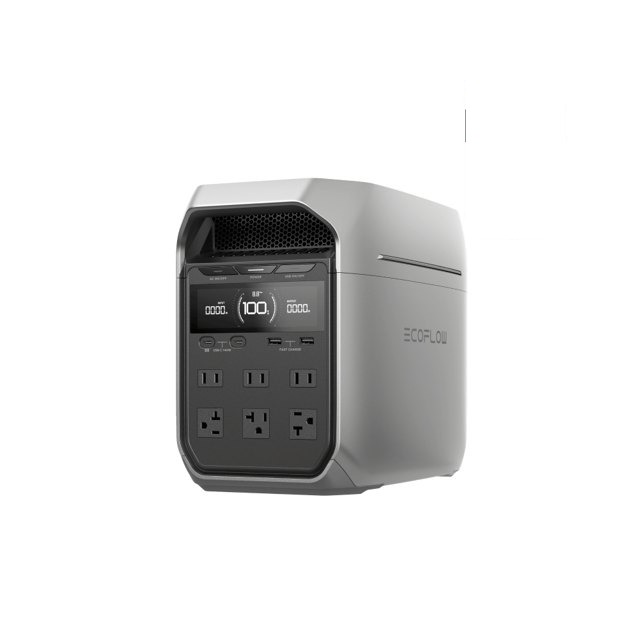
EcoFlowRIVER 3 Plus
Fridgestarts one on a 1,200 W surge
Amazon price not checked
View on Amazon Capacity286 Wh
Output600 W · 1,200 W surge
Overnight≈177 Wh usable
Weight10.4 lb
Recharge60 min
Why we pick it Outdoor Life drew 49–77% of the label out of the twelve units it tested on a 34 W overnight load. Size on that, then check the surge rating against your biggest appliance.
Filter all 18 by what you runBest small unit
Fridgestarts one on a 1,200 W surge
Best 1 kWh unit
Carry by hand2,000 W at 24.9 lb
Best 2 kWh+ unit
Low cost per Wh$0.32 per watt‑hour
 By the Worth To Buy editorial team
Built fromOutdoor Life’s published capacity tests, marked † · maker spec pages · Amazon prices and ratings via our affiliate network’s catalogue
18 of 18 power stations match
Show themFrom maker spec pages and Amazon listing titles; † marks Outdoor Life’s measurements. No tag can simply mean we could not verify that figure (most gaps are on BLUETTI’s Elite 100 V2, AC180 and Elite 200 V2 and the ECO-WORTHY). Every unit here is LiFePO4, so chemistry isn’t a filter.
Phones, laptops, a camp light, and a 40 W CPAP for about 4 hours. Of the five, only the RIVER 3 Plus publishes a surge rating high enough to start a fridge.
Fridgestarts one on a 1,200 W surge
600 W continuous, a 1,200 W surge and a 10 ms UPS switchover in a 10.4 lb box: the only small unit here with a published surge rating high enough to start a fridge.
The catch 286 Wh: a 40 W CPAP runs about 4.4 hours on it, half a night.
Buy it if: You want a small unit that keeps a router or modem on through a short outage and can start a small appliance.
Specs: ecoflow.com spec sheet; Amazon listing title.
4.4(1,202)
Carry by hand600 W at 9.48 lb
The catch No surge rating: its 1,500 W “lifting power” is for pure resistive devices, not motors.
Buy it if: You want 600 W in the small size and don’t need an add-on battery.
Specs: bluettipower.com spec table; Amazon listing title (288Wh 600W LFP).
4.6(1,929)
UPS switchover10 ms, two 140 W USB‑C
The catch Same 300 W ceiling as the Jackery 300 Plus.
Buy it if: You run mostly USB-C gear and would rather skip the inverter.
Specs: ankersolix.com spec table; Amazon listing title.
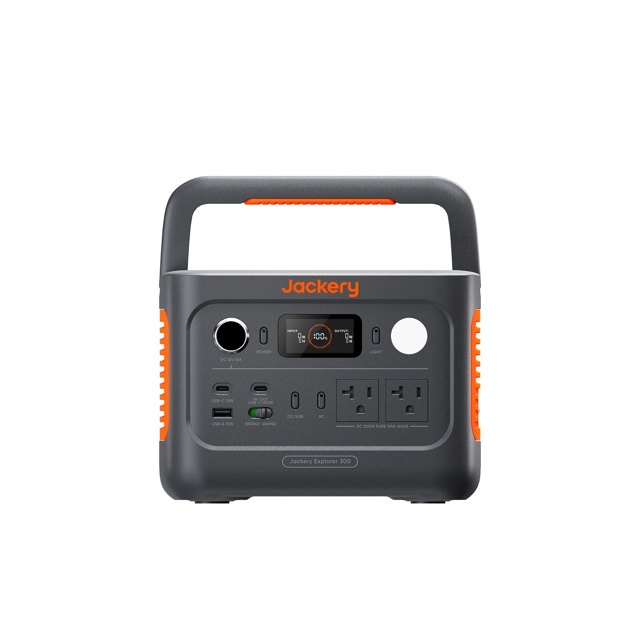
Carry by hand8.2 lb, one AC outlet
The catch 300 W ceiling: no fridge, no kettle. Jackery’s site now sends this model’s page to the Explorer 300 v2.
Buy it if: Weight matters more than output: a laptop, phones, a camera bag.
Specs: jackery.com product page (checked September 2026).
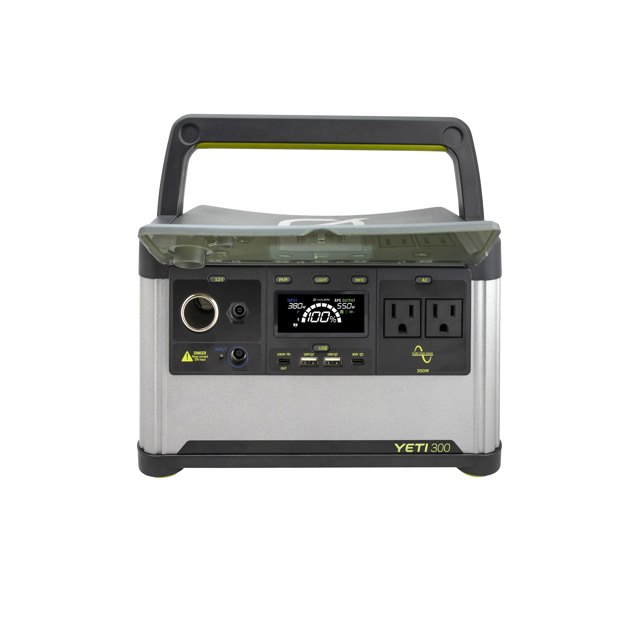
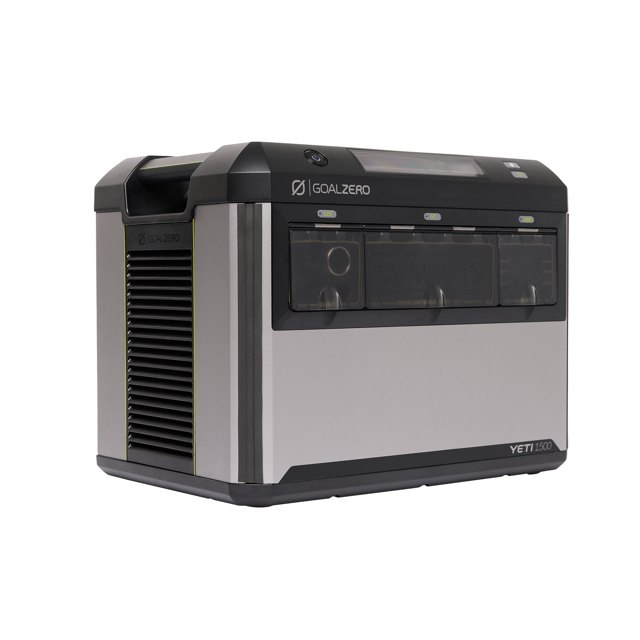
Full in an hour50 min on AC
The catch 350 W continuous and a 600 W surge: no fridge, no kettle.
Buy it if: You already own Goal Zero panels or accessories.
Specs: goalzero.com product page.
A weekend away or a day without power: fridge, router, lights, a CPAP every night. All six start a fridge; the units over 1,000 Wh run it about 6 hours, the 677 Wh Yeti 700 about 4.
4.7(1,675)
Carry by hand2,000 W at 24.9 lb
2,000 W continuous from a 24.9 lb box, full in 49 minutes, with a 10 ms UPS switchover: the most output per pound in the 1 kWh group.
The catch No add-on batteries: Anker dropped expansion on the Gen 2 to save weight.
Buy it if: Your loads are big and short (a fridge, a microwave, tools) and you want the most output you can carry.
Specs: ankersolix.com (spec table; FAQ: no expansion on the Gen 2); Amazon listing title.
4.7(3,690)2000+ bought in past month
Full in an hour60 min on AC
The catch 1,500 W continuous, below the other units over 1,000 Wh in its group, and no independent capacity test.
Buy it if: You want a light 1 kWh unit and your loads stay at 1,500 W or less.
Specs: jackery.com (checked September 2026); Amazon listing title.
4.6(1,811)
Fridge3,600 W surge
The catch Cycles, weight and recharge time not verified.
Buy it if: You want the DELTA 3 Plus’s output figures with an Amazon price, and can live with a spec sheet we couldn’t fully verify.
Specs: bluetti.com; Amazon listing title (1024Wh 1800W / 3600W surge).
4.5(2,643)1000+ bought in past month
Microwave or heater1,800 W continuous
The catch 54% usable at 34 W, and 37 lb.
Buy it if: Your loads are big and short, and you want 1,152 Wh for the price on the card.
Outdoor Life measured 620 Wh (54%) at 34 W and 980 Wh (85%) at 380 W.
Specs: Amazon listing title; Outdoor Life weight and low-draw result.
Add‑on batteriesup to 5 kWh
The catch 27.6 lb, 2.7 lb heavier than the Anker C1000 Gen 2, which has more output.
Buy it if: You want a 1 kWh unit you can add batteries to later, bought direct from EcoFlow.
Specs: ecoflow.com spec sheet.
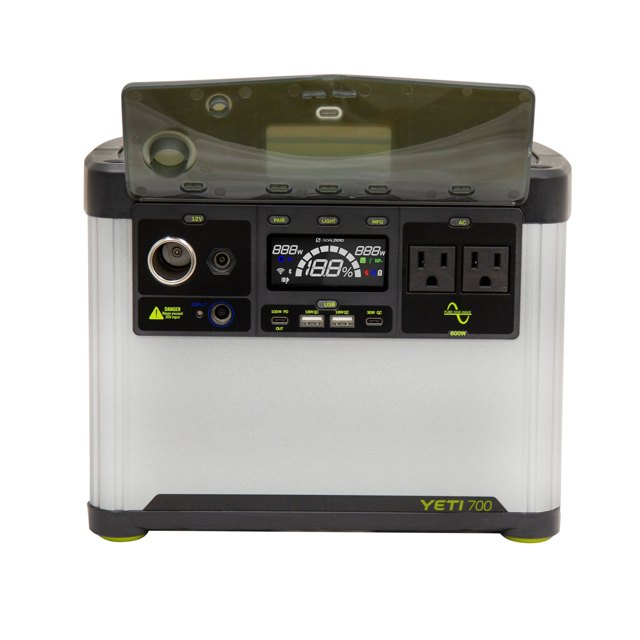
CPAP all night70% usable at 34 W†
The catch 600 W continuous: no microwave, kettle or space heater.
Buy it if: You run small loads such as a CPAP for a long time, and nothing over 600 W.
Outdoor Life measured 480 Wh (70%) at 34 W and 560 Wh (83%) at 380 W.
Specs: goalzero.com product page; Outdoor Life weight/recharge.
Multi-day outages, well pumps, 240 V loads. A 2 kWh unit runs a fridge for about half a day. Three of these list 240 V output, and the ECO-WORTHY is a wired-in battery, not a portable one.
4.7(374)
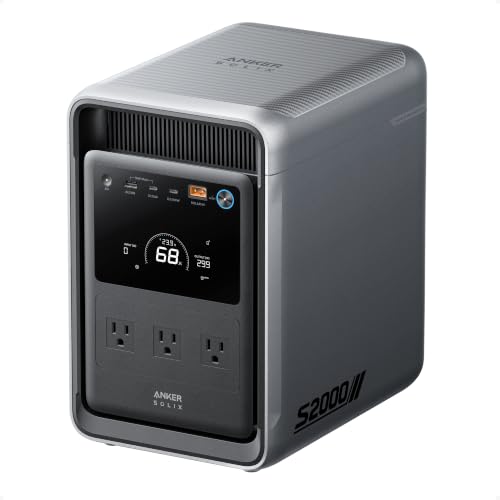
Low cost per Wh$0.32 per watt‑hour
2,010 Wh at $0.32 per watt-hour, the lowest of any unit we could price, in a 35.7 lb box with a 10 ms UPS switchover. The inverter is 1,500 W.
The catch 1,500 W continuous: a big battery with a small inverter.
Buy it if: You want 2 kWh of runtime at the lowest cost per Wh here, and your loads stay at 1,500 W or less.
Specs: ankersolix.com comparison table and notes; Amazon listing title (2,010Wh).
4.7(199)
240 V appliancespair a second unit
The catch Two hours to recharge on AC, and 240 V needs a second unit.
Buy it if: You are buying the first piece of a system and expect to add capacity or 240 V later.
Specs: jackery.com; Amazon listing title.
4.7(937)
Microwave or heater2,600 W continuous
The catch Cycles, weight and expansion not verified.
Buy it if: You want more than 1,500 W in a 2 kWh unit and don’t need 240 V.
Specs: bluetti.com; Amazon listing title (2073.6Wh 2600W).
4.3(167)200+ bought in past month
Add‑on batteries58 kWh across three units
The catch 83.8 lb, and no surge rating from BLUETTI.
Buy it if: You want DELTA Pro 3-class output and 240 V, and plan to add BLUETTI batteries.
Specs: bluettipower.com spec table; Amazon listing title (2764.8Wh 3840W).
4.5(63)
Low cost per Wh$0.35, not portable
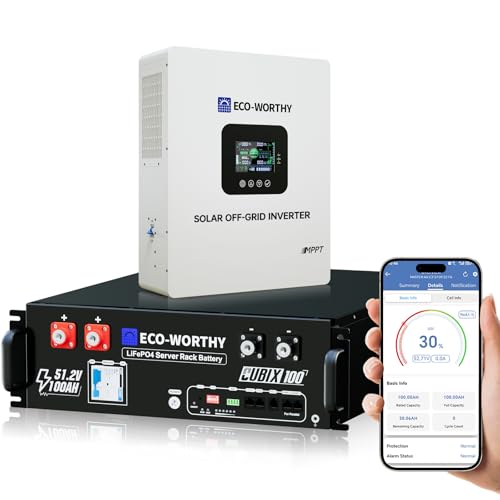
The catch Not portable: a stationary 48 V battery that needs wiring.
Buy it if: You are wiring backup into the house and only care about capacity and price.
Specs: Amazon listing title (5120Wh LiFePO4, AC 5000W inverter).
4.3(714)
240 V appliancessplit‑phase from one unit
The catch The highest Amazon price on the page.
Buy it if: You need 240 V today, or you are wiring it in with a transfer switch.
Specs: us.ecoflow.com spec table; Amazon listing title.
Microwave or heater2,000 W continuous
The catch Goal Zero’s $1,499.95 list price is more than twice the Anker S2000’s Amazon price, for less capacity.
Buy it if: You already own Goal Zero gear.
Specs: goalzero.com product page.
| Model | Cont. W | Surge W | Label Wh | Weight lb | AC to full | Amazon | |
|---|---|---|---|---|---|---|---|
| ≈300 Wh | |||||||
| 600 | 1,200 | 286 | 10.4 | 60 min | — | Amazon → | |
| 600 | — | 288 | 9.48 | 45 min to 80% | $279.99★ 4.4 · 1,202 | Amazon → | |
| 300 | 600 | 288 | 9.1 | 50 min to 80% | $329.99★ 4.6 · 1,929 | Amazon → | |
| 300 | 600 | 288 | 8.2 | 120 min | — | Maker → | |
| 350 | 600 | 297 | 13.7 | 50 min | — | Maker → | |
| ≈1 kWh | |||||||
| Model | Cont. W | Surge W | Label Wh | Weight lb | AC to full | Amazon | |
 | 2,000 | 3,000 | 1,024 | 24.9 | 49 min | $549.99★ 4.7 · 1,675 | Amazon → |
| 1,500 | 3,000 | 1,070 | 23.8 | 60 min | $499.00★ 4.7 · 3,690 | Amazon → | |
| 1,800 | 3,600 | 1,024 | — | — | $499.00★ 4.6 · 1,811 | Amazon → | |
| 1,800 | — | 1,152 | 37 | — | $499.00★ 4.5 · 2,643 | Amazon → | |
| 1,800 | 3,600 | 1,024 | 27.6 | 56 min | — | Maker → | |
| 600 | 1,000 | 677 | 20.9 | 118 min | — | Maker → | |
| 2 kWh+ | |||||||
| Model | Cont. W | Surge W | Label Wh | Weight lb | AC to full | Amazon | |
 | 1,500 | 3,000 | 2,010 | 35.7 | 138 min | $649.98★ 4.7 · 374 | Amazon → |
| 3,000 | 6,000 | 2,042 | 61.5 | 120 min | $899.00★ 4.7 · 199 | Amazon → | |
| 2,600 | — | 2,074 | — | — | $899.00★ 4.7 · 937 | Amazon → | |
| 3,840 | — | 2,765 | 83.8 | 65 min | $1,699.00★ 4.3 · 167 | Amazon → | |
 | 5,000 | — | 5,120 | — | — | $1,779.99★ 4.5 · 63 | Amazon → |
| 4,000 | 8,000 | 4,096 | 113.5 | — | $2,799.00★ 4.3 · 714 | Amazon → | |
| 2,000 | 3,600 | 1,505 | 52.75 | 66 min | — | Maker → | |
Highlighted = highest continuous output in its size. Continuous W must be at least what you run; surge W at least what it takes to start. Dashes are figures we could not verify. The cards’ overnight usable Wh is label Wh × 62% unless marked † (Outdoor Life’s measurement).
| Model | Cycles, to % capacity | Solar in W | Expandable | UPS | 240 V | Source |
|---|---|---|---|---|---|---|
| ≈300 Wh | ||||||
| 3,000 to 80% | 220 | to 858 Wh | 10 ms | — | ecoflow.com spec sheet; Amazon listing title | |
| 3,000 (end point not stated) | 100 | — | — | — | jackery.com product page (checked September 2026) | |
| 3,000 to 80% | 100 | — | 10 ms | — | ankersolix.com spec table; Amazon listing title | |
| 3,000 to 80% | 200 | — | 10 ms | — | bluettipower.com spec table; Amazon listing title (288Wh 600W LFP) | |
| 4,000 to 80% | 200 | — | — | — | goalzero.com product page | |
| ≈1 kWh | ||||||
| Model | Cycles, to % capacity | Solar in W | Expandable | UPS | 240 V | Source |
| 4,000 to 80% | 500 | to 5 kWh | 10 ms | — | ecoflow.com spec sheet | |
| 4,000 to 80% | 600 | — | 10 ms | — | ankersolix.com (spec table; FAQ: no expansion on the Gen 2); Amazon listing title |
| 4,000 to 70% | 400 | — | — | — | jackery.com (checked September 2026); Amazon listing title | |
| — | — | — | — | — | bluetti.com; Amazon listing title (1024Wh 1800W / 3600W surge) | |
| — | — | — | — | — | Amazon listing title; Outdoor Life weight and low-draw result | |
| 4,000 to 80% | 200 | — | — | — | goalzero.com product page; Outdoor Life weight/recharge | |
| 2 kWh+ | ||||||
| Model | Cycles, to % capacity | Solar in W | Expandable | UPS | 240 V | Source |
| 6,000 to 80%; 10,000 to 60% | — | — | 10 ms | — | ankersolix.com comparison table and notes; Amazon listing title (2,010Wh) |
| 4,000 to 70% | — | to 12 kWh; two units paralleled to 24 kWh / 240 V | — | 240 V with a second unit | jackery.com; Amazon listing title | |
| — | — | — | — | — | bluetti.com; Amazon listing title (2073.6Wh 2600W) | |
| 4,000 to 80% | 2,600 | to 12 kWh per unit, 36 kWh across three units | 10 ms | 120/240 V from one unit | us.ecoflow.com spec table; Amazon listing title | |
| 6,000 to 80% | 2,400 | to 58 kWh across three units | 0 or 20 ms | 120/240 V from one unit | bluettipower.com spec table; Amazon listing title (2764.8Wh 3840W) | |
| — | — | — | — | — | Amazon listing title (5120Wh LiFePO4, AC 5000W inverter) |
| 4,000 to 80% | 900 | — | — | — | goalzero.com product page | |
Cycles are each maker’s figure, to the remaining capacity shown: Jackery counts to 70%, the other makers here to 80%, and Anker also quotes the S2000 to 60%. Compare cycle counts only at the same end point. Every unit here is LiFePO4.
TakeawayOvernight you keep about half to three-quarters of the label. Best: Grecell T1000 77%, Lion Energy Summit 72%, Goal Zero Yeti 700 70%. Worst: Jackery Explorer 1000 Plus 49%, Vtoman FlashSpeed 1500 50%. At a 380 W load the eleven units run at that load held 78–92% (the Oupes’s first run: 76%). The gap is the inverter running itself: by the middle of these results, a 1,000 Wh label gives about 600 Wh overnight and about 870 Wh at 380 W.
Measured by Outdoor Life, published 9 January 2026: each unit ran a ~34 W grow light and, separately, a ~380 W dehumidifier until shutdown. Names are as Outdoor Life lists them; only the Yeti 700 and the AC180 are the same models as on our list. The Oupes ran the 380 W test twice (76%, then 92% after three months in storage), and the AC180’s review text gives 39.9% at 34 W where the results table gives 54%. We did not run these tests; we report their numbers.
Arithmetic, not a claim: label Wh × 62% for loads under 100 W (× 87% above) ÷ the load, the middle of Outdoor Life’s measured results above. Appliance wattages are typical; read the plate on yours. “Won’t start” = continuous rating below the running load, or surge rating below the start-up peak.
TakeawayOnly the 1 kWh and 2 kWh classes get a CPAP through the night. The 300 Wh class gives about 4 hours. A full day of refrigerator is beyond the 2 kWh pick, which manages about half a day; the 4 kWh DELTA Pro 3 gets about 24 hours. A space heater runs about an hour on a 2 kWh unit. → Anker SOLIX C1000 Gen 2 · check price
Motors draw several times their running wattage for a second at start-up.
Our three picks
Appliances (typical)
A unit’s surge rating covers the start-up peak for a second or two. Continuous W must be at least what you run; surge W at least what it takes to start. Typical values; compressors and pumps vary.
TakeawayCompressors and pumps draw far more than 300 W to start. A fridge needs about 1,000 W, which rules out every 300 W unit here. Our small pick starts one on its 1,200 W surge, then runs it under 2 hours. A ½ hp well pump needs about 2,200 W to start; every 1 kWh and 2 kWh pick here has a published surge of 3,000 W or more. → EcoFlow RIVER 3 Plus · check price
Uses the same 62% / 87% usable factors as the charts above. Add your loads together if you run several at once.
A fridge, pump or heater rules out the 300 W units (surge chart).
Small loads get about 62% of the label, big ones about 87% (usable Wh).
Buy a unit that takes add-on batteries (EcoFlow RIVER 3 Plus, EcoFlow DELTA 3 Plus, Jackery Explorer 2000 Plus, EcoFlow DELTA Pro 3 and BLUETTI Apex 300) rather than a second stand-alone box.
Well pumps, dryers and some HVAC do. The DELTA Pro 3 and the Apex 300 list 240 V from one unit; the Jackery 2000 Plus needs a second unit.
In Germany and looking at balcony solar with storage instead? Different product, different rules (800 W feed-in cap): see our Balkonkraftwerk comparison (in German).
For a fridge, look at 1 kWh and up. A full-size refrigerator runs about 150 W but needs about 1,000 W to start, which rules out every 300 W unit here. All six units in the 1 kWh group start one, and those over 1,000 Wh run it about 6 hours; a 2 kWh unit manages about half a day. Filter by Fridge to see the 14 that qualify.
Only the 1 kWh and 2 kWh classes, on our arithmetic. For a 40 W CPAP that needs 8 hours, the EcoFlow RIVER 3 Plus (286 Wh) gives about 4.4 hours, about half a night; the Anker SOLIX C1000 Gen 2 (1,024 Wh) about 16 hours; and the Anker SOLIX S2000 (2,010 Wh) about 31 hours. See the runtime chart.
Less than the label. Across the twelve units Outdoor Life tested, they got 49–77% of the label at a 34 W load and 78–92% (the Oupes’s first run: 76%) at 380 W. By the middle of those results, a 1,000 Wh label gives about 600 Wh overnight and about 870 Wh at 380 W. The gap is the inverter running itself. See label vs. outlet.
Whichever covers what you run at the same time: continuous W must be at least the total you run, and surge W at least what it takes to start. A 1,000 W microwave draws about 1,300 W and a 1,500 W space heater uses all of a 1,500 W unit. Check watts separately from capacity: the 2,010 Wh Anker SOLIX S2000 has 1,500 W continuous, a big battery with a small inverter.
A ½ hp well pump runs about 800 W but needs about 2,200 W to start; every 1 kWh and 2 kWh pick here has a published surge of 3,000 W or more. Many well pumps, dryers and some HVAC need 240 V: the EcoFlow DELTA Pro 3 and the BLUETTI Apex 300 list that from one unit, and the Jackery Explorer 2000 Plus needs a second unit.
Look at 2 kWh and up. A 2 kWh unit runs a fridge for about half a day and a 40 W CPAP for about 31 hours. For a full day of refrigerator, the 4 kWh EcoFlow DELTA Pro 3 gets about 24 hours. If the outage might get longer, buy a unit that takes add-on batteries.
We did not test, weigh or time any unit: † figures are Outdoor Life’s, the other overnight usable figures are label Wh × 62%, and specs come from maker pages and Amazon listing titles checked September and October 2026, as each card’s source line says. Outdoor Life tested only the Yeti 700 and the AC180 exactly; we left blank any figure we could not find.
Prices, star ratings and rating counts are Amazon’s, from our affiliate network’s catalogue, on the date shown on each card. 6 of the 18 units are not in that catalogue, so their price is blank and their button goes to Amazon or the maker. The three “bought in past month” badges are Amazon’s, recorded Oct 15, 2026. Rating counts are often pooled across a model’s variants.
 Home Appliances · 21 comparedWhich Robot Vacuum Should You Buy?
 Kitchen Appliances · 8 comparedWhich 24-Inch Dual-Zone Wine & Beverage Fridge Chills Cans?
 Home Appliances · 8 comparedRoborock vs Dreame vs Narwal: Which Robot Mop Fits Your Floors?
 Online Learning · 2 comparedLingoAce vs WuKong Chinese: Group Classes or 1-on-1?
All Home Power & Backup guides →Every guide we have published →